







This makes it all the more important to have well-designed kitchen lighting that not only looks good but also supports healthy cooking, concentration, and well-being – especially at the beginning of a new year, when many people want to live more consciously.
In this article, you will learn how to create the ideal conditions for healthy eating with the right lighting in your kitchen and on your cooking island, which lights are particularly suitable, and what you should consider when planning and selecting them.
Why light plays a central role in the kitchen
Good lighting influences our behavior more than many people realize. In the kitchen, lighting has a direct impact on:
- Safety when cutting and preparing food
- Perception of food and colors
- Concentration and motivation when cooking
- Mood and appetite
- Energy levels and well-being
A poorly lit kitchen leads to fatigue, inaccurate work, or even injuries. Well-planned kitchen lighting, on the other hand, supports structured processes, promotes conscious eating, and makes cooking a positive experience again.
Especially in the new year – when people want to cook healthier, eat fresher and live more consciously – light is an often underestimated factor for success.
The three levels of kitchen lighting
Modern kitchen lighting ideally consists of several light sources. This is the only way to create a functional and at the same time cozy atmosphere.
1. Basic lighting – orientation and sense of space
Basic lighting ensures uniform illumination of the entire kitchen. It provides orientation and prevents dark corners.
Suitable luminaires:
- Ceiling lights
- LED panels
- Flat surface-mounted lights
- Recessed spotlights with a wide beam angle
It is important that the light is glare-free, evenly distributed, and sufficiently bright. For kitchens, approx. 300–400 lux is recommended as basic lighting.
2. Task lighting – precision for healthy cooking
The most important level of lighting in the kitchen is task lighting. Cutting, peeling, weighing, and preparing food require good visibility and realistic color rendering.
Typical areas:
- Worktops
- Sink
- Stove and hob
- Preparation areas
Suitable lights:
- LED under-cabinet lights
- Recessed lights under wall cabinets
- Swivel spots
- Linear LED strips
For healthy, safe working, at least 500 lux is recommended, and up to 750 lux for detailed preparation.
3. Accent and mood lighting – enjoyment and atmosphere
In addition to functionality, atmosphere is also important. Accent lighting creates depth, structure, and coziness – especially important if the kitchen is open plan.
Examples
- Indirect lighting above wall cabinets
- Lighting in shelves or niches
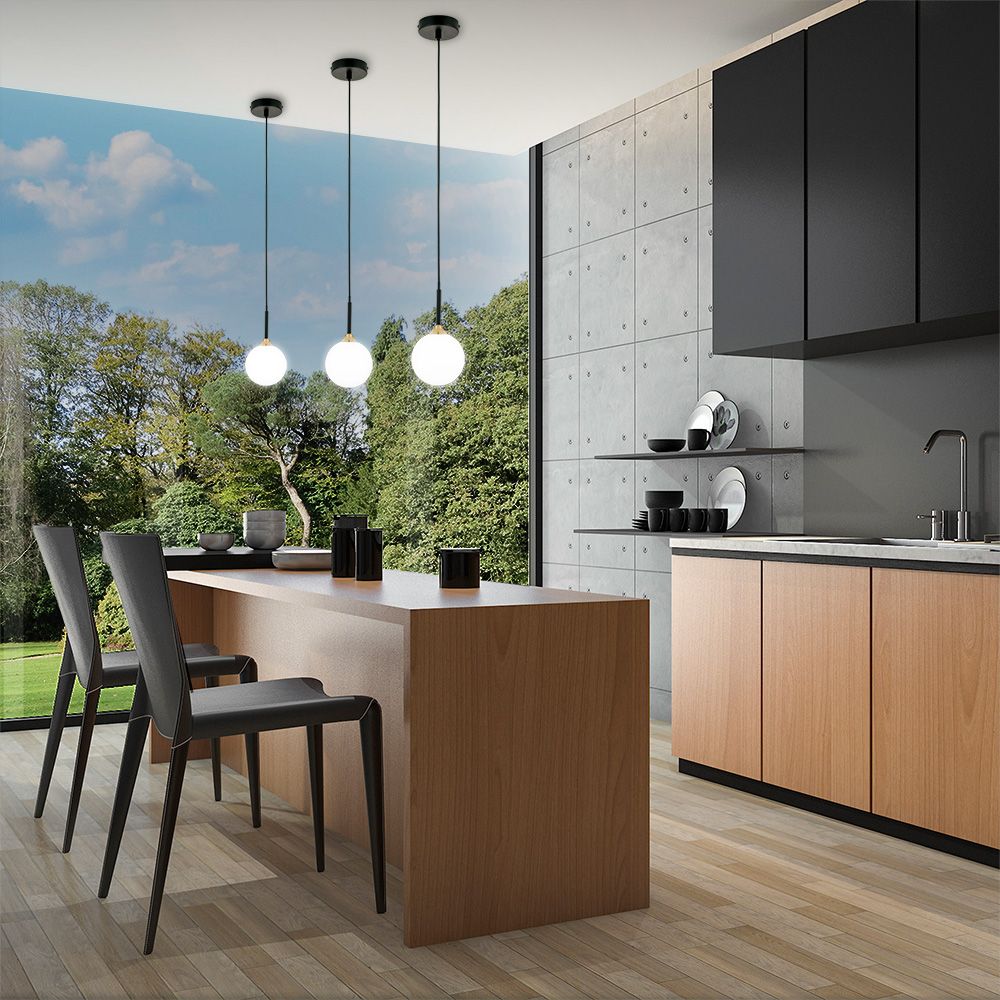
- Subtle pendant lights above the cooking island
- Warm lighting in the dining area
This transforms the kitchen from a pure workspace into a place of enjoyment.
Lighting cooking islands correctly – the heart of the modern kitchen
For many households, the cooking island is the center of the kitchen: work surface, meeting place, bar, communication zone. The lighting requirements are correspondingly high.
Pendant lights above the cooking island
They are the most popular solution for cooking islands – and for good reason:
- Targeted illumination of the work surface
- Visual structuring of the room
- Decorative design element
Recommendations:
- 1 large pendant light or 2–3 smaller models
- Distance to the work surface: approx. 60–70 cm
- Warm to neutral white light (3,000–4,000 K)
- Dimmable for flexible use
Pendant lights made of glass, metal or in combination with warm surfaces are particularly stylish – ideal for modern and classic kitchens.
Recessed and spotlight systems for clean lines
If you prefer a more minimalist look, opt for:
- Recessed spotlights in the ceiling
- Swivel spotlights above the island
- Linear lighting systems
These solutions offer high functionality and give the kitchen a tidy appearance – perfect for timeless, modern kitchen concepts.
Light color and healthy eating – an underestimated connection
Light not only influences our mood, but also our perception of food.
The right color temperature
- Warm white (2,700–3,000 K): cozy, relaxing – ideal for dining areas
- Neutral white (3,500–4,000 K): energizing, clear – perfect for work surfaces
- Cool white (5,000 K and above): very technical, usually unsuitable for kitchens
Neutral white light is recommended for healthy cooking on work surfaces. It:
- supports concentration
- reduces fatigue
- makes food look fresh and natural
High color rendering (CRI) for fresh ingredients
A high CRI value (Ra ≥ 90) ensures that colors are rendered realistically. This is particularly important for:
- Fruit and vegetables
- Meat and fish
- Fresh herbs
This allows you to recognize freshness, ripeness, and quality at a glance—a clear advantage for conscious nutrition.
Fit into the new year: Light as motivation in the kitchen
Many New Year's resolutions revolve around:
- Eating healthier
- Cooking more yourself
- Less processed foods
- Enjoying food more consciously
A well-lit kitchen can actively support these goals:
- It invites you to cook
- It appears tidy and structured
- It increases the desire to prepare fresh ingredients
- It facilitates planning and preparation
Bright, clear light in the morning helps you start the day, while warm, dimmed light in the evening ensures relaxed meals.
Energy efficiency and sustainability in the kitchen
Modern LED lights are ideal for the kitchen:
- Up to 80% less energy consumption
- Long service life
- Hardly any heat generation
- Immediate full brightness
High-quality LED technology is particularly worthwhile in the kitchen, where the lights are often switched on. In combination with dimmers or sensors, energy consumption and costs can be reduced even further – a plus point for a sustainable start to the new year.
Planning tips for your kitchen lighting
- Integrate lighting design into your kitchen planning at an early stage
- Provide connections for pendant lights above the cooking island
- Plan separate circuits for basic, task, and accent lighting
- Prefer dimmable solutions
- Match the style of the lights to the kitchen and living space
Conclusion: Cook healthily and with motivation with the right lighting
The right lighting in the kitchen and on the cooking island is much more than just a design aspect. It influences safety, concentration, motivation, and ultimately our eating habits. With well-thought-out lighting design, high-quality lights, and the right light color, you can create the ideal conditions for healthy cooking—and a successful, conscious start to the new year.
Whether functional work lighting, stylish pendant lights above the cooking island, or atmospheric accents: with the right lighting, your kitchen will become a place where health, enjoyment, and design come together in harmony.