


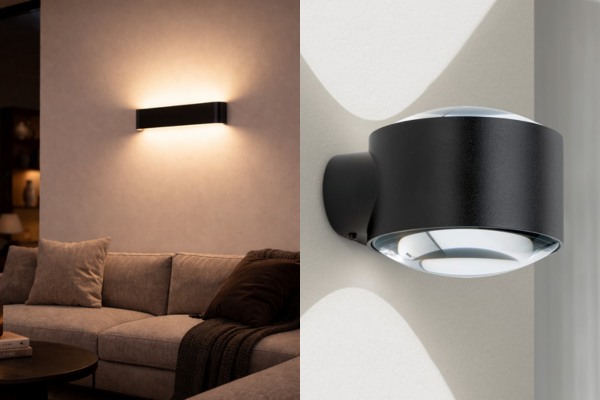
Unlike direct lighting, where light shines directly into the room, indirect lighting uses the surroundings—such as walls, ceilings, or furniture—as reflective surfaces. The result is soft, glare-free light that makes rooms appear larger, calmer, and more elegant.
In this article, you’ll learn how indirect lighting works, where it’s used, and how you can use it to create a specific atmosphere in your home.
What is indirect lighting?
Indirect lighting means that the light source itself is not the focal point. Instead, the light is reflected off surfaces and distributed evenly throughout the room.
Typical examples include:
- LED strips along ceilings or furniture
- Light strips behind TVs or shelves
- Wall sconces that shine upward and/or downward
- Hidden light sources in niches or recesses
The light first hits a surface and is diffused from there—this creates a particularly pleasant and natural-looking light pattern.
Why indirect lighting is so popular
Indirect lighting offers numerous advantages that make it an integral part of modern interior design concepts.
1. Glare-free light
Since the light source is not directly visible, there is no unpleasant glare, which is particularly important in living rooms, bedrooms, or when watching TV.
2. Pleasant atmosphere
Indirect light has a soft and calm effect. It creates a relaxed environment and is ideal for cozy evenings.
3. Rooms appear larger
Lighting walls and ceilings creates visual depth. Rooms appear taller, wider, and more open.
4. Modern design
Indirect lighting looks elegant and high-quality. It fits perfectly with modern interior styles and minimalist decor.
5. Flexible lighting design
You can combine indirect light with other light sources to create different moods.
Where indirect lighting works particularly well
Indirect light can be used in almost any room—often even better than traditional lighting.
Living room – atmosphere and relaxation
Indirect lighting is particularly popular in the living room. It creates a warm, relaxed atmosphere and often replaces harsh overhead lighting.
Typical applications:
- behind the TV
- along the ceiling
- in shelves or sideboards
- behind the sofa
The result is a cozy room with pleasant light—ideal for evenings on the couch.
Bedroom – Peace and Comfort
In the bedroom, light plays a central role in relaxation and rest. Indirect lighting creates a soft, soothing atmosphere here.
Popular solutions:
- behind the headboard
- along the ceiling
- as indirect night lighting
Warm white light enhances the effect and helps you unwind.
Kitchen – Function Meets Design
Indirect lighting also has a firm place in the kitchen. It provides even light, especially under wall cabinets or along countertops.
Additionally, it can be used as a decorative element:
- under kitchen islands
- along baseboards
- in open shelving
This creates a modern and high-quality look.
Bathroom – Wellness Atmosphere
Indirect light in the bathroom creates a spa-like ambiance.
Typical applications:
- behind the mirror
- under vanities
- along ceilings or walls
The light appears soft and relaxing—perfect for starting the day or evening.
Hallway and entryway – gentle guidance
In the hallway, indirect lighting provides guidance and a welcoming atmosphere.
Examples:
- Light along the wall
- Lighting for steps
- Indirect ceiling lighting
This creates a harmonious first impression.
Which fixtures are suitable for indirect lighting?
There are many ways to implement indirect lighting—depending on the room and the desired effect.
LED strips
The most flexible solution. They can be integrated almost anywhere and are ideal for:
- Furniture
- Ceilings
- Niches
Wall lights (Up & Down)
These emit light upward and/or downward, creating beautiful light cones on the wall.
Ceiling strips and light profiles
Perfect for continuous lines of light along the ceiling—particularly elegant and modern.
Furniture-integrated lighting
Light directly within the furniture creates subtle effects and additional comfort.
The right light color for indirect lighting
The light color significantly determines the effect.
- Warm white (2,700–3,000 K): cozy, relaxing
- Neutral white (3,500–4,000 K): clear, modern look
Warm white light is generally recommended for living spaces, as it creates a pleasant and cozy atmosphere.
Dimming for maximum flexibility
Indirect lighting only achieves its full effect with a dimming function.
This allows you to:
- adjust the light intensity
- create different moods
- switch between functional and decorative lighting
Dimmable lighting is a major added value, especially in the living room and bedroom.
Avoiding common mistakes
There are also a few things to keep in mind with indirect lighting:
- Light that is too dim → The room appears dark
- Incorrect light color → The atmosphere feels disharmonious
- Visible light sources → The effect is lost
- Lack of combination with direct light → Insufficient functionality
Good planning ensures that indirect light is shown to its best advantage.
Combining indirect lighting correctly
The best effect is achieved by combining several types of light:
- General lighting for orientation
- Indirect light for atmosphere
- Accent lighting for highlights
This mix ensures a balanced and versatile lighting concept.
Energy efficiency and modern LED technology
Indirect lighting is implemented almost exclusively with LEDs—and for good reason:
- low power consumption
- long service life
- flexible applications
- low heat generation
This allows you to enjoy stylish lighting without sacrificing energy efficiency.
Conclusion: Lighting that transforms spaces
Indirect lighting is far more than a trend—it is a central element of modern interior design. It creates atmosphere, promotes well-being, and gives your home a special touch.
With the right planning and the right fixtures, you can transform any room into a harmonious lighting landscape—elegant, cozy, and functional all at once.
Discover indirect lighting at ORION
At ORION Lighting, you’ll find numerous ways to stylishly incorporate indirect lighting—from elegant wall sconces to modern LED solutions.


