








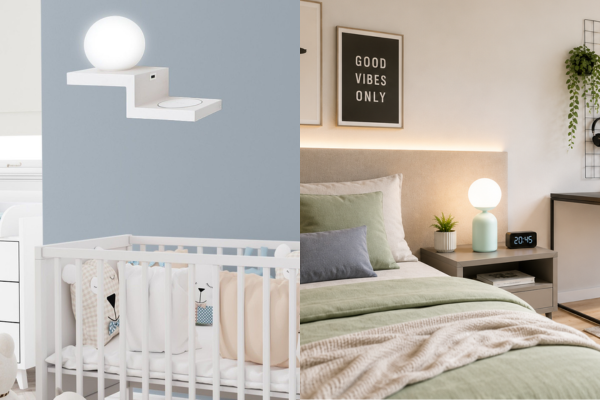
The crib becomes a loft bed, the changing table becomes a desk, and stuffed animals give way to posters.
Anyone who thinks ahead when furnishing the room can avoid costly renovations later and create the right lighting mood for their child at every stage of life. Here's what matters.
Why Lighting Matters So Much in a Child's Room
Light does far more than simply help us see. It regulates the day-night rhythm, affects mood and concentration, and can either support or disrupt falling asleep. Children's eyes are also more sensitive than adults': the lens is still clearer and lets more light reach the retina unfiltered. Thoughtful, glare-free lighting is therefore not a luxury but an important building block for healthy development, restful sleep, and focused learning.
One rule applies at every age: a single ceiling light is never enough. What works best is always a combination of ambient lighting, a night light, and task lighting that can be adapted to the situation at hand.
The Baby Years: Soft, Dimmable Light
In the first year of life, babies spend most of their time asleep — and parents often get up at night to feed or change them. Here, one thing matters most: dim, warm light that doesn't fully wake anyone up.
What a baby's room needs:
- A dimmable ceiling light or uplighter as ambient lighting, ideally with a warm white color temperature (2,700–3,000 Kelvin). This makes it possible to reduce brightness to a minimum during nighttime diaper changes without fully waking the baby.
- A small night light near an outlet that provides soft, indirect light — handy for nighttime check-ins without having to switch on a bright ceiling light.
- A changing-table lamp or flexible table lamp that casts targeted but non-glaring light onto the changing area.
Harsh, cool-white light should be avoided entirely at this stage — it has an activating effect and can disrupt the natural sleep-wake rhythm.
Toddler and Preschool Age: Light for Playing and Discovering
Once children become mobile, the room turns into an adventure land. Now, alongside the sleeping area, there's also a play area — and with it, new lighting requirements.
Key elements:
- Bright, even ambient lighting for play areas on the floor, ideally glare-free and without harsh shadows, so there's enough light even for puzzles or building blocks on the rug.
- A cozy bedtime light, such as a small table or novelty lamp with warm light — many children at this age develop a first fear of the dark, and soft lighting provides reassurance.
- Dimmable solutions, so the mood can shift easily from active play to a calm bedtime story in the evening.
Colorful accents are welcome now too: novelty lights shaped like stars, animals, or clouds create a playful atmosphere without sacrificing functional lighting.
The School-Age Child: Light for Learning
Once school starts, the room changes again — the desk becomes the focal point, and good lighting becomes a genuine necessity for focused work and eye protection.
What matters most:
- A high-quality desk lamp is now essential. It should be glare-free, provide a neutral white light (around 4,000 Kelvin), and ideally be dimmable and adjustable so it can adapt to different tasks and times of day.
- Correct placement: right-handed children should have the lamp positioned to light from the left, left-handed children from the right — this avoids distracting shadows falling across the paper.
- Sufficient ambient light in the room, so there isn't too strong a contrast between a brightly lit desk and a dark room — a stark contrast tires the eyes further.
- A reading light by the bed, such as a small clip-on or wall-mounted lamp, for the nightly bedtime story.
The Teenage Years: Light as a Retreat and a Statement
By the teenage years, the room finally becomes a truly personal space — and lighting preferences become more individual. Alongside functionality, personal style now plays a major role.
Typical requirements:
- Flexible task lighting remains important, especially with a growing workload for school. A good LED desk lamp with adjustable color temperature supports both focused studying and relaxed reading in the evening.
- Mood lighting for a personal retreat area, such as LED strips, string lights, or dimmable table lamps, creates a cozy atmosphere for listening to music, chatting, or unwinding.
- Indirect lighting, for example via wall lights or LED strips behind the bed or shelving, provides a modern, soft lighting mood without relying on a ceiling light at all.
- Smart, controllable systems tend to go over well at this age: being able to adjust color and brightness via an app or remote control gives teenagers a sense of ownership over their own space.
Practical Tips for Every Age
- Prioritize dimmability — a single fixture can then cover everything from bright task lighting to soft evening ambiance.
- Warm light tones in the evening, more neutral tones during the day — this supports the natural rhythm of activity and rest.
- Route cables and outlets safely for children, especially with portable lamps and string lights.
- Look for certified quality — sturdy materials and safe construction pay off, especially for lamps that end up in children's hands or within their reach.
- Choose solutions that grow with the child: a high-quality, neutrally designed ceiling light or a flexible lighting system can often stay in the room from toddlerhood right through the teenage years — only the accents and additional lamps need to change.
Conclusion
The right lighting grows along with the child — from soft, warm light during the baby years, through playful accents at preschool age and functional task lighting during the school years, to individual lighting solutions in the teenage years. Anyone who starts out with dimmable, flexible, and glare-free lighting won't need to redesign everything later, but can simply expand on the existing lighting concept.
At Orion Leuchten, you'll find the right lighting for every stage — from gentle night-light solutions for the nursery to modern desk lamps for the teenage room. Get inspired by our range and create a room for your child where light and wellbeing come together perfectly.