








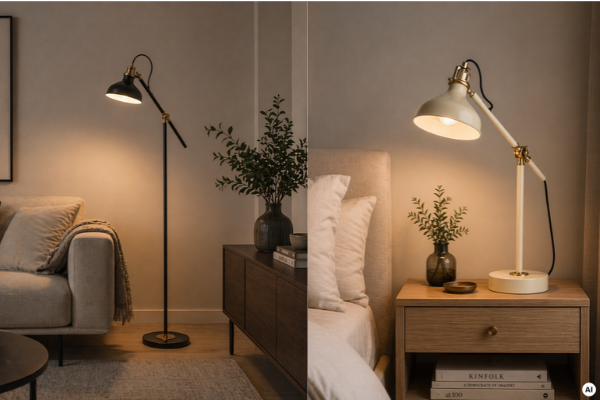
As the days grow shorter, the sun sets as early as the afternoon, and the weather takes on a gray hue, we once again spend more time within our own four walls. While summer is characterized by natural daylight, artificial lighting becomes increasingly important in the fall and winter.
Whether it’s soft lighting in the living room, a cozy reading nook, an invitingly lit entryway, or atmospheric lighting accents in the bedroom—the right lighting in the fall and winter can positively influence our perception of space and our sense of well-being.
We’ll show you how to make the most of the dark season with different light sources, the right light color, and stylish fixtures.
Why Light Is So Important During the Dark Season
Light affects far more than just our vision. It plays a crucial role in our natural day-night rhythm, our alertness, and our well-being.
While in summer we often wake up with the first rays of sunlight, in winter the day frequently begins in darkness. Even after a long workday, it’s often already dark outside.
For some people, the lack of daylight can manifest as fatigue, listlessness, or a low mood. Colloquially, this phenomenon is often referred to as the “winter blues.”
Carefully designed home lighting can help us feel more comfortable at home. It’s not about making every room as bright as possible. Rather, it’s about adapting the lighting to the time of day, the activity, and the desired atmosphere.
Bright light helps us with everyday tasks, while soft, warm-white light in the evening creates a relaxing environment.
1. Warm-White Light for More Coziness
When it’s cold, gray, and dreary outside, we long for warmth indoors. This can be achieved not only with textiles, natural materials, and warm wall colors, but especially with the right light color.
The color temperature of a light source is measured in Kelvin (K). The lower the Kelvin value, the warmer the light appears.
The following light colors are particularly well-suited for cozy lighting in the fall and winter:
- 2,200–2,500 Kelvin: exceptionally warm light reminiscent of candlelight for atmospheric accents.
- 2,700 Kelvin: classic warm-white light for living rooms, bedrooms, and dining areas.
- 3,000 Kelvin: a pleasant warm white that combines coziness with functional brightness.
- 4,000 Kelvin: neutral white light for workspaces, kitchens, or the home office.
Especially in the evening, a combination of warm white light sources and reduced brightness is recommended. This creates a pleasant contrast to the darkness outside.
Warm white light looks particularly harmonious when paired with wood, natural textiles, and fixtures in brass, gold, or bronze.
2. Multiple light sources instead of a single ceiling fixture
A common mistake in home lighting is relying exclusively on a single central ceiling fixture.
While this provides good general lighting, the room often lacks visual depth and atmosphere.
Especially during the dark winter months, it’s worth working with different levels of lighting.
A balanced lighting concept ideally consists of three components:
General lighting: Ceiling lights or pendant lights provide even brightness and allow for easy navigation within the room.
Task lighting: Floor lamps, reading lamps, or desk lamps provide focused light for specific activities.
Accent lighting: Table lamps, wall sconces, and indirect light sources add decorative accents and create ambiance.
The interplay of these three types of lighting creates distinct pockets of light that make the room feel more lively and inviting.
In the evening, for example, you can turn off the central ceiling light and leave only a floor lamp next to the sofa and a table lamp on the sideboard turned on.
This alone changes the entire feel of the room.
3. Indirect Lighting: Soft Light for Long Winter Evenings
Hardly any other type of lighting is as well-suited for cozy winter evenings as indirect lighting.
With this method, the light isn’t directed directly into the room but is first aimed at walls or ceilings and reflected off them.
The result is a soft, diffused light pattern with fewer harsh shadows and less direct glare.
Particularly suitable are:
- Ceiling floodlights that direct light upward
- Wall sconces with indirect light output
- Up-and-down wall sconces
- Concealed LED light strips
- Fixtures for accentuating wall niches and architectural details
For example, a ceiling floodlight next to the sofa can create a particularly pleasant lighting atmosphere without illuminating the entire room with a central light source.
Wall sconces that emit light both upward and downward also create interesting lighting effects and lend even plain wall surfaces more character.
Our tip: Indirect light is particularly effective on light-colored walls and ceilings, as they reflect a larger portion of the incoming light.
4. Floor Lamps: The Perfect Companions for Cozy Winter Evenings
When it gets dark early outside, there’s hardly anything better than curling up on the sofa with a good book, a cup of tea, and a warm blanket.
The right floor lamp is a must-have for this.
Floor lamps are particularly versatile because they can be placed flexibly anywhere in the room without requiring additional wall or ceiling mounts. They can create a cozy reading nook, brighten up a dark area, or serve as a decorative piece of furniture.
Uplighters for a pleasant room atmosphere
Uplighters direct their light upward and use the ceiling as a reflective surface. This creates soft general lighting.
Models with an additional, separately switchable reading light combine indirect lighting with targeted light for reading.
Floor lamps with fabric shades for added coziness
A fabric shade filters the light and, depending on the material and color, ensures a pleasantly soft light distribution.
Shades in cream, beige, or other natural tones, in particular, complement a cozy fall and winter decor perfectly.
Modern LED floor lamps for flexible lighting moods
Dimmable LED floor lamps allow you to adjust the brightness to your liking. This means the same lamp can be used for focused reading as well as for relaxing evenings.
Whether classic, modern, or minimalist—a well-placed floor lamp can transform an entire room.
5. Table lamps create small islands of light with a big impact
You don’t always need a large light fixture to create a cozy atmosphere. Small light sources, in particular, have a special effect during the dark winter months.
A table lamp on a windowsill, a dresser, a sideboard, or a side table brings light to areas that are often not well reached by general lighting.
Several of these pockets of light give a room structure and depth.
Table lamps look especially beautiful in the following places:
- on a dresser in the entryway
- next to the sofa on a side table
- on the windowsill in the living room
- on a sideboard in the dining area
- on the nightstand in the bedroom
- on an open shelf with sufficient space and proper heat dissipation
Cordless, rechargeable lamps are also an interesting way to flexibly provide light wherever a power outlet isn’t available.
Whether during dinner, on a small side table, or as a decorative accent on the windowsill—rechargeable table lamps can be easily moved to different locations.
6. Dimmable Lights: The Right Lighting Ambience for Every Time of Day
In winter, we often spend more hours under artificial lighting than in summer. This makes it all the more important that the light can be adjusted to different needs.
Dimmable lights offer a great deal of flexibility for this purpose.
In the morning and during the day, the lighting can be brighter. When cooking, reading, or working, we need enough light to carry out our activities comfortably.
In the evening, however, the brightness can be gradually reduced.
A dimmable pendant light above the dining table, for example, provides good illumination during a meal together and later creates a more intimate atmosphere over a glass of wine.
Dimmable lights are also particularly practical in the living room and bedroom.
Light bulbs with “Dim-to-Warm” technology are an interesting option. With these, not only does the brightness change when dimming, but so does the color temperature. The more the light is dimmed, the warmer it appears—similar to a classic incandescent bulb.
When purchasing, make sure that the light fixture or bulb is dimmable and compatible with the dimming system you’re using.
7. Warm metal tones and natural materials enhance the lighting effect
It’s not just the light color that determines how cozy a light fixture appears. Its materials, finishes, and colors also influence the atmosphere.
Warm metal tones really come into their own, especially in the fall and winter.
Brass and gold lend the room a warm, elegant aura. Shiny surfaces reflect the light and add decorative accents.
Bronze, antique gold, and patina have a slightly more subdued effect and harmonize beautifully with autumnal colors, dark wood, and natural materials.
Fabric shades add a soft, cozy element to the decor and can filter the light pleasantly.
Opal glass ensures diffused light distribution and complements both modern and classic interior styles.
Smoked glass adds decorative accents and can create a particularly atmospheric effect when paired with warm white light.
The interplay of warm lamp finishes with interior colors such as beige, cream, terracotta, burgundy, dark green, or cognac is especially beautiful.
This creates a harmonious overall look that radiates warmth even on gray winter days.
8. The Right Winter Lighting for Every Living Area
Every room has different lighting requirements. Especially during the dark months, it’s worth taking a closer look at the lighting design in each living area.
Living Room: A Cozy Retreat
In the fall and winter, the living room is often the heart of the home.
A combination of a ceiling light, a floor lamp, and several smaller light sources provides flexible lighting for different situations.
Indirect light behind or next to the sofa, a table lamp on the sideboard, and warm-white wall sconces make the room particularly inviting.
Dining Room: Enjoying Meals Together in Atmospheric Lighting
As the evenings grow longer, the dining table becomes an increasingly important gathering place.
A low-glare pendant light positioned low enough over the table creates a pleasant pool of light and draws attention to the shared dining area.
Dimmable pendant lights or decorative chandeliers are particularly well-suited for switching between functional lighting and a cozy evening ambiance.
Bedroom: Soft Light for Relaxation
In the bedroom, lighting should convey a sense of calm, especially in the evening hours.
Warm-white bedside lamps, wall sconces with indirect light, and dimmable light sources create a pleasant environment for unwinding.
Very bright, wide-area lighting is less recommended immediately before bedtime.
Entrance Hall and Hallway: A Warm Welcome
Anyone coming home on a cold, dark winter evening will appreciate a warmly lit entryway.
A warm-white ceiling light provides orientation, while additional wall sconces or a small table lamp on the dresser make the entryway feel cozier.
This way, you start feeling at ease the moment you step into your home.
Home Office: Bright Light for Focused Work
On gloomy winter days, natural daylight at the workspace is often insufficient.
Good general lighting combined with a well-aimed desk lamp supports comfortable work.
Neutral-white light at around 4,000 Kelvin can be a sensible choice here. It’s also important to avoid distracting reflections on the screen and direct glare.
9. The outdoor area can shine in winter, too
The dark season offers a wonderful opportunity to highlight the outdoor area with light.
A stylishly lit patio, a softly illuminated tree, or decorative outdoor wall sconces on the house’s facade can create a beautiful effect even when viewed from inside.
When the view from the living room window isn’t just a dark expanse but a subtly lit garden, it creates additional visual depth.
The home’s entrance also benefits from well-planned outdoor lighting.
Wall sconces next to the front door, path lights along the walkway, and appropriate outdoor spotlights provide guidance and a welcoming atmosphere.
When selecting outdoor lights, make sure they have an IP rating suitable for the installation location and direct the light as precisely as possible. This helps you avoid unnecessary light pollution and creates a pleasant atmosphere without overly brightening the surroundings.
10. Make Conscious Use of Daylight—Even When the Sun Isn’t Shining
As beautiful as artificial lighting may be, natural daylight remains especially important, particularly in winter.
Even on a cloudy day, it’s often significantly brighter outdoors than indoors.
Therefore, make the most of the few bright hours of the day as consciously as possible.
Open curtains and blinds in the morning, position your workspace near a window if possible, and take regular walks outdoors.
Light-colored walls and strategically placed mirrors can also help distribute existing daylight more effectively throughout the room.
Artificial light complements natural daylight and ensures that we can comfortably use our living spaces even after sunset.
Can the right lighting help combat the winter blues?
Pleasant lighting design can support subjective well-being and help us feel secure within our own four walls.
Bright light during the day and subdued, warm-white light in the evening can also support a regular day-night rhythm.
However, it is important to distinguish between atmospheric home lighting and medical light therapy.
Special daylight lamps used for light therapy operate at significantly higher illuminance levels than ordinary home lighting fixtures. They are used, among other things, to treat seasonal affective disorder.
Conventional ceiling lights, floor lamps, or table lamps are no substitute for such therapy. If you experience prolonged low mood, severe fatigue, or other depressive symptoms, it is advisable to consult a doctor.
For everyday home design, however, the following applies: A bright, cheerful home during the day and a cozy lighting atmosphere in the evening can make the dark season more pleasant.
Energy-Efficient Lighting for Long Winter Evenings
Since lights are often left on longer in the fall and winter, using energy-efficient light sources is particularly worthwhile.
Modern LED bulbs require significantly less electricity than conventional incandescent bulbs while providing comparable brightness.
LED technology is a sensible choice, especially when multiple light sources are used simultaneously to create a cozy atmosphere.
Even classic fixtures with replaceable bulbs can often be retrofitted with modern LEDs.
When making your selection, pay attention not only to the energy efficiency rating but also to the appropriate brightness, light color, and dimmability.
This way, you can enjoy long winter evenings without wasting energy.
7 Simple Lighting Ideas for Gray Winter Days
You don’t have to replace all your lighting to make your home feel more wintery and cozy. Often, small changes are all it takes.
1. Switch to warm-white bulbs. A color temperature of about 2,700 Kelvin creates a cozier atmosphere in many living spaces.
2. Create multiple lighting zones. Place table and floor lamps in different spots around the room.
3. Use indirect lighting. Downlights and wall sconces create a pleasantly soft lighting atmosphere.
4. Dim your lights in the evening. Adjust the brightness of your lights to suit the time of day and your activities.
5. Illuminate dark corners. A small table lamp can turn a previously overlooked area into a decorative focal point.
6. Opt for warm materials. Fixtures in brass, gold, or bronze, as well as fabric shades, enhance a cozy interior.
7. Include the outdoor area. A subtly lit garden or balcony creates a beautiful winter atmosphere even when viewed from inside.
FAQ: Common Questions About Lighting During the Darker Months
What kind of light is particularly pleasant in winter?
Warm white light with a color temperature of about 2,700 to 3,000 Kelvin is ideal for cozy living spaces. During the day and for tasks requiring concentration, brighter lighting—possibly neutral white—may be more suitable.
How can I make my living room cozier in winter?
Combine multiple light sources such as floor lamps, table lamps, and wall sconces. Warm-white light, indirect lighting, and dimmable fixtures create a particularly cozy atmosphere.
Which lamps are best for cozy winter evenings?
Floor lamps with fabric shades, uplights, decorative table lamps, and wall sconces that cast indirect light are particularly well-suited. Cordless, rechargeable lamps also offer flexible options for creating atmospheric lighting accents.
Is warm white or neutral white light better in winter?
That depends on the time of day and the intended use. Warm white light creates a cozy atmosphere and is particularly suitable for the evening hours. Neutral white light can be useful during the day in workspaces or kitchens.
Can regular living room lighting replace a daylight lamp?
No. Special light therapy devices operate at significantly higher illuminance levels and are designed for a different purpose. However, living room lighting can create a pleasant atmosphere and support overall well-being.
How can I save electricity on lighting in the winter?
Use energy-efficient LED bulbs, take advantage of available natural light, and illuminate only the areas where you spend time. Appropriate dimmable lights can further contribute to energy savings when set to lower brightness levels.
Conclusion: Turn the dark season into the most beautiful time of light
Short days and long nights don’t have to be a reason for low spirits. On the contrary: especially in fall and winter, light reveals its special creative power.
While we often barely give artificial lighting a second thought in the summer, during the dark season we can consciously use light to design our homes.
Warm-white light sources, indirect lighting, decorative table lamps, elegant floor lamps, and dimmable pendant lights transform living spaces into cozy retreats.
It’s not about having as much light as possible, but about having the right light at the right time in the right place.
Whether it’s a modern LED fixture, a classic brass lamp, a cozy floor lamp with a fabric shade, or a sparkling crystal chandelier—at ORION Lighting, you’ll find a wide variety of options to make your home stylish and inviting even during the darker months.
Discover the most beautiful lights for cozy fall and winter evenings at ORION and bring light, warmth, and atmosphere into your home. Because when it gets dark outside, your home should shine all the bright